Zuid China
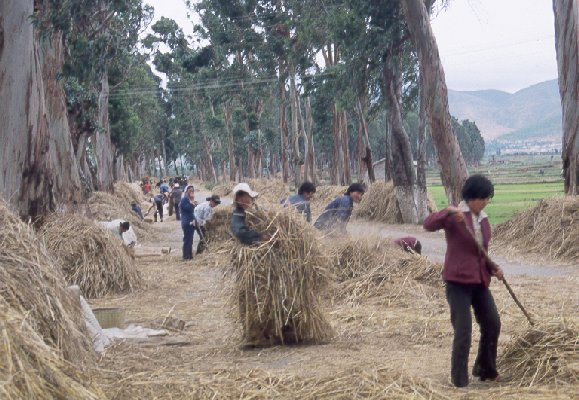 Ik ben maar een keer in China geweest, drie maanden, als onderdeel van een reis van een half jaar, van Indonesië, Singapore, Maleisië, Thailand, Hongkong, China en Pakistan.
Radio
Anekdote
Na Yangshuo, het stadje in een prachtig kars-landschap, ging ik terug naar Guilin, de provincie hoofdstad. Ik hoorde van andere toeristen dat de trein van Guilin naar Kunming (500 km) spectaculair mooi is. Met een stoomlocomotief over een enkelspoor door de bergen, met vele tunnels en afgronden, zigzaggend langs de rand van ravijnen. Een aanrader. Helaas ligt Guilin halvewege het parcour tussen Kanton en Kunming. Het loket personeel legde me uit dat een kaartje verkocht aan toeristen een gegarandeerde zitplaats moet opleveren, terwijl de beschikbare ruimte afhangt van het aantal mensen dat in Guilin uitstapt. Er kunnen per reis maar zes kaartjes verkocht worden aan toeristen. En hoewel het loket om acht uur 's ochtends open gaat, staan er vanaf zes uur 's ochtends al de eerste toeristen in de rij. En nu is het twaalf uur. Dit gaat dus niet lukken, en ik ga naar het lokale vliegveld. Daar kan ik nog dezelfde dag met het vliegtuig naar Kunming.
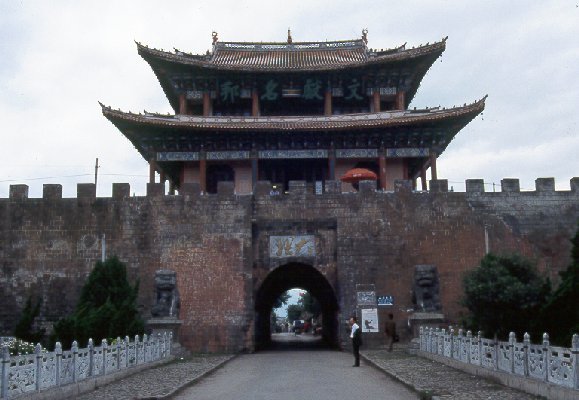 In het vliegtuig ontmoet ik een paar backpackers die ik ook al op het station zag. We willen allemaal door naar Dali (zie hiernaast), een sprookjesachtig stadje aan een prachtig meer, gesticht door Kublai Khan, de zoon van Chengis Khan. 's Avonds in Kunming gaan we meteen naar de bus stop, en vinden daar een hotelletje. 's Ochtends om zes uur gaat de bus. Misschien had ik toch nog even in Kunming moeten blijven, want daar bevindt zich het stenen bos, heel vreemde en mooie rotsformaties. Niet gezien dus.
Dali is nog zo'n 300 km verderop, en het is een prachtige tocht. Misschien een beetje krap voor mijn benen, met acht uur te gaan. De chauffeur is zo aardig een cassette van een westerse dame op te zetten, en uit beleefdheid speelt hij de hele cassette met hardrock af, op pittig volume. Daarna neemt hij wraak door een cassette van de Beijing Opera op te zetten. Alle chinezen in de bus kijken verrukt. Booing, . . . boing, boing boing (bekken-geluiden) waarna een aantal zangeressen een bijzonder realistische vertolking geven van straatkatten die gewurgd worden. Het is duidelijk dat ik een handvol nuances mis om dit te kunnen waarderen, en het schiet me te binnen dat die chinezen waarschijnlijk exact hetzelfde hadden met onze hardrock.
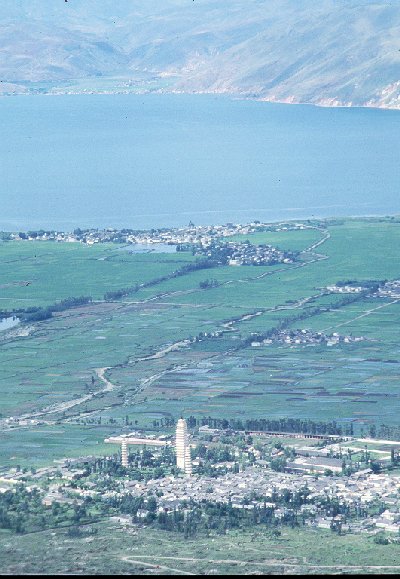 Dali (zie hiernaast) is een heel plezierig stadje. Ik ga direct naar een historische massage-salon, waar een doofstomme masseur zorgt dat ik weer recht kan lopen, want die acht uur opgevouwen in een bus hebben me geen goed gedaan. Dan door naar Biguan II. Biguan betekent 'hotel', en twee betekend 2e klasse. Ik neem bijna altijd 2e klasse. Dit hotel heeft slaapzalen die nagenoeg leeg zijn. In China mogen chinezen nooit op dezelfde kamer slapen als westerlingen. Ik bedoel niet mannen bij mannen en vrouwen bij vrouwen, maar letterlijk wat ik zeg. Voor dertig guldencent kan ik overnachten, samen met mijn vrienden de backpackers.
Ook in Dali zijn er etnische minderheden, zoals de bai en de nasi, met heel andere kleren, cultuur en gewoontes. Ze doen me sterk denken aan de hilltribes die ik in noord-Thailand gezien heb, twee maanden geleden, zo'n 400 kilometer verderop.
 Met een zweedse backpacker huren we fietsen, en we gaan naar het meer. Een verkeerde afslag en we staan op het middenpleintje van een boer. We willen omdraaien en snel weg gaan, maar de boer gebaart ons te gaan zitten (foto)
. We hebben lange gesprekken met handen en voeten, en de boer nodigt ons uit om een boottochtje te maken. We wandelen naar het meer, hij praat met een visser, en we mogen in de boot. De visser blijft aan land, en de boer blijkt geen enkel talent te hebben om de boot te bedienen. We gaan twee meter vooruit, maken een halve bocht, gaan achteruit en komen weer tot stilstand tegen de kade (foto)
. Einde show. De visser ligt dubbel, wij ook, en de boer ook. Geen enkel probleem dat het niet gelukt is, er wordt heel spontaan en plezierig omgegaan met iets waarbij ik zelf toch wel wat schaamte zou hebben als ik die boer was.
Met een zweedse backpacker huren we fietsen, en we gaan naar het meer. Een verkeerde afslag en we staan op het middenpleintje van een boer. We willen omdraaien en snel weg gaan, maar de boer gebaart ons te gaan zitten (foto)
. We hebben lange gesprekken met handen en voeten, en de boer nodigt ons uit om een boottochtje te maken. We wandelen naar het meer, hij praat met een visser, en we mogen in de boot. De visser blijft aan land, en de boer blijkt geen enkel talent te hebben om de boot te bedienen. We gaan twee meter vooruit, maken een halve bocht, gaan achteruit en komen weer tot stilstand tegen de kade (foto)
. Einde show. De visser ligt dubbel, wij ook, en de boer ook. Geen enkel probleem dat het niet gelukt is, er wordt heel spontaan en plezierig omgegaan met iets waarbij ik zelf toch wel wat schaamte zou hebben als ik die boer was.
We lopen verder en gaan naar een grote graanschuur. De boer maakt een paar geheimzinnige bewegingen, en opent dan de deuren. Het blijkt een tempel te zijn, volop in bedrijf met wierook, en een groot gekleurd beeld (foto)
. De boer maakt met gebaren duidelijk dat hier hard gevochten is, en dat de vijand de tempel niet als zodanig herkend heeft. Hij refereert aan de revolutionaire garde, die tijdens de culturele revolutie korte metten maakte met alles wat religieus is. Er zijn hier ook vijf doden gevallen, en het waren slechte tijden. Weinig eten. Ongelooflijk toch wat je met handen en voeten kunt uitleggen. We gaan terug naar zijn huis, en de boer nodigt ons uit om te komen eten. Ik kijk even in de pot, en daarin zit witte rijst met rode pepers, en het lijkt me niet veel. Met gebaren maak ik duidelijk dat mijn maag hier niet tegen kan, wat trouwens niet echt waar is. Hij kent gelukkig nog een drankje wat heel goed is en waar veel alcohol in zit, en roept dan zijn dochter. Nu wordt het voor mij nog moeilijker, want ik wil hem helemaal niet op kosten jagen, dat is juist waarom ik maagpijn pretendeerde. Gelukkig kan ik hem tegen houden. De zweed en ik gaan weer naar het hotel. Vlakbij de boer koop ik wat pakken sigaretten, en breng die bij de boer langs (foto)
. Wat een geweldige kerel, en waarom zie ik zulke mensen nooit in Nederland?
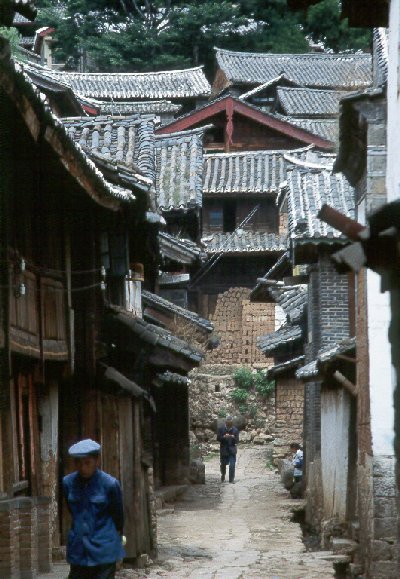 Later ga ik naar Lijiang, een klein stadje zon'n 200 km verderop, door de bergen. Lijiang heeft prachtige huizen met kolossale gebogen daken (foto). Heel indrukwekkend. Vol met de etnische Nasi, een heel vriendelijk en open volk. Ook daar veel fietsen, onder andere langs het huis van een wereldberoemde dokter
. Hij heeft vele gastenboeken, met allerlei nationaliteiten, en ik teken natuurlijk ook.
Later ga ik naar Lijiang, een klein stadje zon'n 200 km verderop, door de bergen. Lijiang heeft prachtige huizen met kolossale gebogen daken (foto). Heel indrukwekkend. Vol met de etnische Nasi, een heel vriendelijk en open volk. Ook daar veel fietsen, onder andere langs het huis van een wereldberoemde dokter
. Hij heeft vele gastenboeken, met allerlei nationaliteiten, en ik teken natuurlijk ook.
Een paar dagen later ga ik met een pasgetrouwd Australisch stelletje, een engelsman en twee nederlanders een driedaagse trektocht maken door de Tiger Leaping Gorge. Aan het begin moeten we de Yangtse rivier over, die hier meer dan honderd meter breed is, en wildstromend tussen de bergen (foto)
. De veerman is een arrogante eikel, die zijn machtspositie heel goed kent, en pas komt opdagen wanneer het hem uitkomt. Tien dollar per persoon per oversteek is zeer ruim betaald. Helaas is dit de enige manier om bij de Gorge te komen. Hij heeft een grote opblaasbare raft, die hij honderden meters stroomopwaarts trekt. Dan mogen er twee van ons bij, en steekt hij diagonaal over, want de rivier stroomt hier echt hard. Nog een paar keer en hij heeft zijn jaarsalaris er weer op zitten.
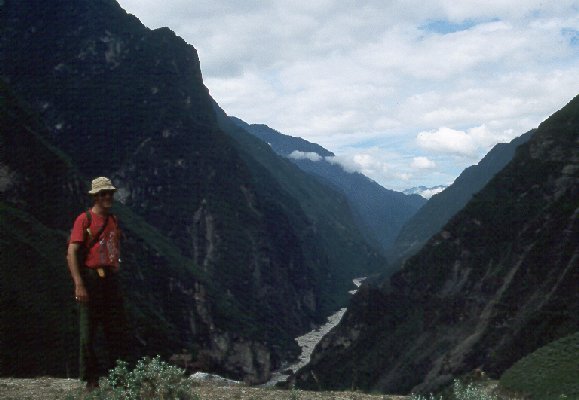 De trektocht is fantastisch, en voor het grootste gedeelte makkelijk te doen. Je kunt driehonderd meter steil omlaag kijken, de Yangtse in. Aan de overkant een muur van achthonderd meter, met daarop een paar krassen die volgens de overlevering gemaakt zijn door de klauwen van een kolossale hemelse tijger, die hier uitgleed. Een touriste krijgt bij een afgrond een gevoel van spontane hoogtevrees (foto)
. Ze zeurt over de diepte, en ik antwoord mopperend dat er geen probleem is. Als je hier naar beneden kukelt zul je er niets van voelen, want zodra je aankomt zullen je hersens verspreid zijn over minstens tien vierkante meter, ruim voordat pijngewaarwordingen uit je gewrichten doorgegeven kunnen worden. De bitch heeft geen gevoel voor humor.
De trektocht is fantastisch, en voor het grootste gedeelte makkelijk te doen. Je kunt driehonderd meter steil omlaag kijken, de Yangtse in. Aan de overkant een muur van achthonderd meter, met daarop een paar krassen die volgens de overlevering gemaakt zijn door de klauwen van een kolossale hemelse tijger, die hier uitgleed. Een touriste krijgt bij een afgrond een gevoel van spontane hoogtevrees (foto)
. Ze zeurt over de diepte, en ik antwoord mopperend dat er geen probleem is. Als je hier naar beneden kukelt zul je er niets van voelen, want zodra je aankomt zullen je hersens verspreid zijn over minstens tien vierkante meter, ruim voordat pijngewaarwordingen uit je gewrichten doorgegeven kunnen worden. De bitch heeft geen gevoel voor humor.
Op steile hellingen toch nog dorpjes en trapsgewijze akkertjes (foto)
. Vriendelijke mensen die hun boerderijtje ook verhuren als bed and breakfast. Dat ontbijt is ei en rijst, met thee.
Toch kan niet iedereen de omgeving waarderen: aan het eind van de trektocht lopen we door een strafkamp waar men een weg aanlegt met pikhouwelen. We spreken daar stiekem met een leraar die iemand terugsloeg bij een vuistgevecht, maar over een paar jaar gelukkig weer vrijkomt.
Na Lijiang ging ik met bus en trein naar Xi'an
South China
I ve only been once to China, for three months, as part of a journey of half a year, from Indonesia, Singapore, Malaysia, Thailand, Hong Kong, and China to Pakistan.
Radio
Anecdote
After my visit to Yanghsuo, that pretty village in the mountains, I returned to Guilin, the capital of the district. I heard from other tourists that there is a spectacular train ride from Guilin to Kunming, 500 km of beauty. Unfortunately, Guilis is located in the middle of the railway between Kanton (Guangzhou) and Kunming. The man at the counter told me that tickets sold to foreigners needed to have a seat guaranteed, which they couldn t if they sold more than six tickets for tourists a day. What an ultimate crap story. He could not sell me one, it was noon, and he already sold his limit. I had to return the next day, at 8 am, but advised me to be there before 6 am, to avoid the crowd. That didn t sound appealing, so I went to the local airport and arrived the same day in Kunming.
In the plane I met some other tourists who I already met at the station. We all wanted to continue to Dali, a magnificent city near a lovely lake, and founded by Kublai Khan, the grandson of Chengis Khan. The same night we went to the bus stop, bought a ticket and found a cheap hotel nearby. The next day we left at six in the morning. Maybe I should have stayed longer in Kunming, as there appears to be a spectacular stone forest, with strange rock formations. Missed that.
Dali is about 300 km from Kunming, and the view from the bus was great. Sloping hills, bending roads, cute villages. The bus was definitely made for Chinese, as my legs didn t fit and I had to fold myself for the full eight hours in the bus. The driver was so kind to accept a cassette from a western lady, and played the hard rock at full volume, to the horror of the Chinese passengers. When the tape stopped, he took revenge by playing a tape with the Beijing Opera at full volume, to the delight of all Chinese passengers. Booing, . . .booing, booing (cymbal sounds), and then some singers made a very realistic impression of street cats being strangled. It was clear that I missed some subtleties to be able to appreciate this music, and then I realized that the Chinese might have the same with our hard rock.
Dali turned out to be a delightful village, but I went straight to the famous deaf and dumb masseur, as my legs didn t obey me due to eight hours of folding in the bus. The masseur was great, and I m sure he s very popular with tourists as well, as he was the only one with rayban sunglases.
Then I went to the Biguan 2. Biguan means hotel and the 2 stands for second class. Almost always I took the 2nd class. The dormitory was about empty, as usual. For about 15 dollar cents per night I had the dormitory for me and my fellow backpackers. Now I should explain that it for Chinese it s forbidden by law to sleep in the same hotel room as a foreigner, regardless to gender. The story goes that once a Chinese girl sees the big dick of a foreigner, she will never be satisfied with a Chinese guy no more. Very understandable, as far as I m concerned.
Dali has a magnificent gate, see picture above, and a very relaxed atmosphere. It even had a hard rock caf , where backpackers could play their guitar and where a friend of mine fell in love with the waitress.
Dali has it s cultural minorities too, like the bai and the nasi, all with colourful clothes and different habits than the uniform Han Chinese. They reminded me of the hill tribes in the north of Thailand, who I visited some two months ago, about 400 km south of Dali.
Together with a Swedish backpacker we rented a bike, and went for the lake. One wrong turn and we were at the inner court of a farmer. We wanted to turn around, but the farmer invited us to sit, and have a tea.
We animatedly spoke for an hour with hands and feet, and it always strikes me how east that is. It just takes two people who eager to learn, truly interested, patient, open and modest, like most people when they just take their time.
The farmer invited us for a boat trip on the lake. He took us to a harbour and spoke with a fisherman. The fisherman stayed ashore, and the farmer did his utmost best to get the boat moving in the right direction. Obviously he failed, we went ahead for a meter, then a half turn, backward and struck the quay. The firsherman burst out in laughter, so did we and so did the farmer. No problem whatsoever and I appreciated how fun could cover up the situation. We walked a bit further, and then the farmer took us to a barn in a court yard. He made some movements with his hands and then opened the door.
It turned out to be an operational Buddhist temple, which were hard to find after most were destroyed during the cultural revolution. With his hands the farmer indicated that there was a big fight for this temple. It was carefully camouflaged as a barn, but the enemy, the revolutionary guard, had spotted the sight. A gunfight followed, and five soldiers were killed. An amazing story, all told by hand and feet.
We returned to his house, and he invited us for dinner. I had a small look in the pot, and it contained only a bit of rice and chilli peppers. That didn t look like sufficient. I indicated that I had problems with my stomach, and now he poured me some hard liquor with herbs. Not too bad, really. He called for his daughter and she was about to buy me such a bottle. Of course I couldn t accept that, as he wasn t that rich. We shook hands and left. Then I bought some packs of cigarettes and returned to give them to the farmer. What a great guy, and how come I hardly ever meet people as friendly as him in the Netherlands?
Later I went to Lijiang, a small town about 200 km north, through the mountains. Lijiang is known for its beautiful houses with curved roofs, hanging over. Very impressive, see picture above.
Many people here are from the Nasi tribe, very friendly people. Again I rented a bike and toured around, amongst other to the house of a world famous doctor, see picture above. He had lots of guest books, sorted by nationality, and I couldn t figure how this man became the worlds biggest fly trap, meeting about every tourist that ever visited Lijiang.
A few days later I met a newly wed couple from Australia. I always enjoy Australian tourists as they are really cool types, no worries and lots of drinks and fun. Only Kiwis drink even more. Together with them, an English guy and two Dutch, we went for a three day trek through the Tiger Leaping Gorge.
For a start we had to cross the Yangtse river, more than hundred meter wide and with an impressive current. The local ferry man was an arrogant bastard, well aware of his power position. If he wouldn t take you, you had no chance of doing the trek, and you had to wait for the daily bus back to Lijiang. He only showed up after the bus left, smart guy. His minimum fare was 10 US$ each, and that s an outrageous sum of money in this remote district. Finally we accepted, as he didn t allow for any bargaining. He took his big inflatable raft, and pulled it upstream for hundreds of meters. Then two of us could enter, and he crossed the river diagonally, as the strong current played with the raft as the wind plays with a feather. Finally we all got to the other side of the Jangtse. A few times more and the ferry man can retire.
The trekking was really great, and not too difficult for the bigger part. We could look down for three hundred meters straight down into the Yangtse, which squeezes itself through this canyon.
On the other side was this wall, about 800 meters straight up, which some big scratches on it, like it was made from a colossal heavenly tiger who slipped down and tried to get a grip with its nails. Hence the name.
Passing a vertical slope, one girl started to complain about vertigo. Annoyed I told her not to worry, when you fall down you won t feel a thing, because your brain will be scattered over 10 square meters before any sensation of pain would reach it. The bitch had no sense of humour.
At night we camped at small villages, which seemed to be glued on the wall. Nice people who also let their farm as bed and breakfast. The breakfast is rice with egg, and tea.
Google-earth users can check this place out by clicking here
Not all over there were happy campers, at the end of the trek we walked through a prison camp, and secretly spoke with a teacher of English, who fought back at a fist fight, but will fortunately be released in a few years to come.
After Lijiang I went to Xi an by bus and train.